
Cushion Tire vs. Pneumatic Tire Forklift: The Complete Comparison Guide
Posted by United Lift LLC on
Buying a forklift based only on the tire material is a mistake that could cost you thousands in the long run. Most buyers don't realize that the cushion tire vs pneumatic tire forklift debate isn't just about the rubber; it's a permanent commitment to a specific chassis and operating environment. If you pick a cushion tire for a gravel yard, you'll bottom out before the first shift ends. Conversely, bringing a pneumatic lift onto a delicate warehouse floor can lead to expensive surface damage and unnecessary bulk in tight aisles.
We know how frustrating it is to weigh the upfront price difference against the fear of future downtime from punctures or floor repairs. You want a machine that works as hard as you do without hidden maintenance surprises. This guide simplifies the decision by breaking down the critical differences between these two configurations. You'll discover exactly which forklift fits your specific job site, how to project long-term maintenance costs, and the best way to optimize your fleet efficiency for years to come.
Key Takeaways
- Learn why the cushion tire vs pneumatic tire forklift decision is actually a permanent choice regarding your machine’s chassis and frame.
- Identify which tire composition prevents expensive warehouse floor damage while maintaining the tight turning radius needed for narrow aisles.
- Compare the upfront capital savings of cushion units against the rugged, puncture-resistant durability of solid pneumatic tires for outdoor yards.
- Use the "90/10 Rule" to accurately select equipment based on your primary operating environment to avoid unnecessary downtime.
- Understand how a strategic hybrid fleet can balance indoor precision with outdoor versatility to optimize your total cost of ownership.
The Core Difference: Why Tire Choice Dictates Your Forklift Chassis
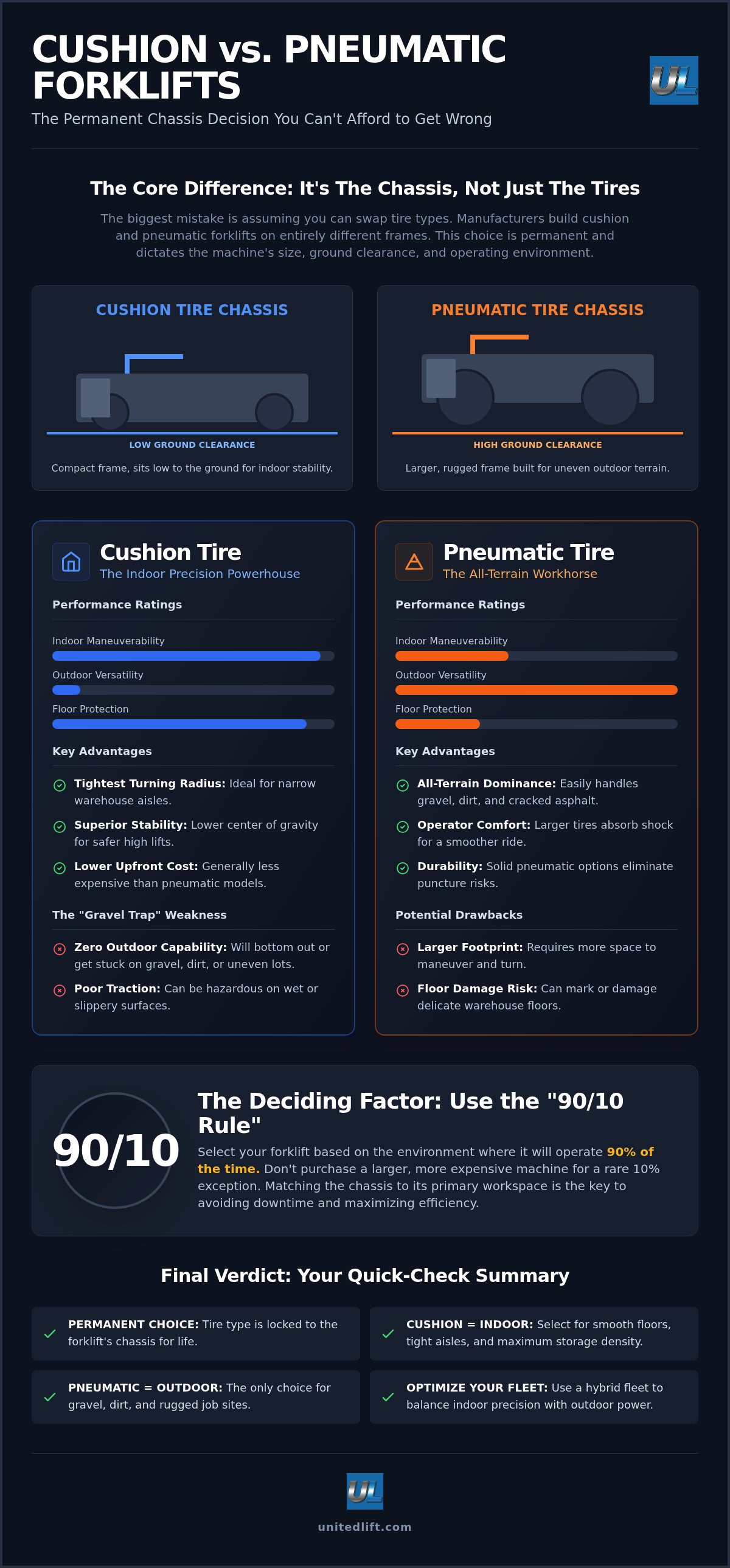
The biggest mistake you can make when browsing forklifts for sale is assuming you can swap tire types later. It doesn't work like that. The cushion tire vs pneumatic tire forklift debate is actually about the machine's frame, not just the rubber hitting the ground. Manufacturers build these units on entirely different chassis. Once you buy a cushion tire lift, you're committed to that configuration for the life of the machine. You cannot simply press a cushion tire onto a pneumatic frame or vice versa because the axles, wheel wells, and ground clearances don't align.
Understanding Forklift components and tire types is the first step toward making a smart investment. Cushion tires consist of solid rubber molded directly to a steel band. They're compact and sit low to the ground. Pneumatic tires are larger and look similar to heavy duty truck tires. They're either air-filled or made of solid, puncture-proof rubber. Because the tires differ so much in size, the forklifts themselves are engineered from the ground up to accommodate those specific dimensions. This impacts everything from how tight the machine can turn to how well it handles a bump in the yard.
Understanding the Cushion Tire Chassis
Cushion tire forklifts feature a smaller, more compact frame. This design makes them the go-to choice for tight warehouse aisles and indoor manufacturing plants. Because the tires are smaller, the machine sits lower to the floor. This low ground clearance actually provides a significant advantage: it lowers the center of gravity. You get better stability when lifting heavy loads to high rack levels. These machines are typically less expensive upfront because the chassis requires less steel and a smaller counterweight than their outdoor counterparts.
Understanding the Pneumatic Tire Chassis
Pneumatic tire forklifts use a much larger, more rugged frame. They're built to handle the "shock" of uneven terrain like gravel, dirt, or cracked asphalt. You'll notice these machines have much higher ground clearance. This is essential for navigating transitions between a loading dock and a yard without bottoming out. To maintain balance with these larger tires and higher lift points, the chassis is often longer and wider. This larger footprint requires a heavier counterweight to ensure the machine stays grounded on rough surfaces, making it a true outdoor workhorse.
Cushion Tire Forklifts: The Indoor Precision Powerhouse
Cushion tires are the undisputed kings of the warehouse floor. These tires consist of a solid rubber compound molded directly to a circular steel band. Because they don't rely on air pressure, they're much smaller than their pneumatic counterparts. This compact size allows the entire forklift to be narrower and shorter. In the cushion tire vs pneumatic tire forklift comparison, the cushion model wins every time for indoor maneuverability. It can pivot in tight aisles where a pneumatic machine would be forced to make a three point turn.
Beyond space savings, these tires offer superior floor protection. On high gloss or epoxy coated warehouse floors, pneumatic tires can sometimes leave heavy marks or even cause surface stress. Cushion tires distribute weight differently. They provide a "scrubbing" action that is gentler on smooth concrete surfaces during sharp turns. To keep your facility compliant, remember that OSHA safety standards for forklift tires mandate daily inspections. You need to check for "chunking," which is where pieces of the rubber break off, or flat spots that can compromise stability.
Top Benefits of Cushion Tire Units
Space efficiency is the primary driver for choosing a cushion lift. If your facility uses narrow aisles to maximize storage density, you need the tighter turning radius these machines provide. Stability is another major factor. Since the tires are smaller, the forklift has a lower center of gravity. This makes it feel more planted when you're lifting heavy pallets to the top of a racking system. Maintenance is also simplified. You'll never deal with a flat tire or have to monitor air pressure levels before a shift starts.
The Limits of Cushion Tires
While they excel indoors, these tires have a clear "Gravel Trap" weakness. If you drive a cushion tire forklift onto a gravel lot or uneven dirt, the small tires will quickly sink or spin. They lack the surface area and tread depth to handle anything other than smooth pavement. Traction is also a concern on wet or icy loading docks. Without the deep lugs found on pneumatic tires, cushion units can slide easily in damp conditions. Long distance travel is another hurdle. Solid rubber holds heat. If you drive a cushion lift at top speed across a massive campus for hours, the rubber can actually soften and degrade prematurely.
If your operation stays mostly on smooth concrete, you can browse our inventory of new and used forklifts to find a cushion model that fits your budget and your space.
Pneumatic Tire Forklifts: Versatility for Tough Environments
Pneumatic forklifts are the heavy hitters of the yard. Unlike the compact indoor models, these machines thrive on uneven terrain like lumber yards, construction sites, and recycling centers. In the cushion tire vs pneumatic tire forklift comparison, pneumatic models stand out because of their sheer size and ruggedness. They feature deep, aggressive treads designed to bite into mud, loose soil, and snow. This traction is vital for maintaining safety and momentum when you aren't working on a perfectly flat concrete floor.
The primary advantage of a pneumatic tire is its ability to absorb shock. On a rough job site, every bump and pothole creates vibrations that can rattle the machine and the operator. Pneumatic tires act as a natural suspension system. This cushioning effect protects the forklift's internal components from premature wear and significantly reduces operator fatigue. When your team is more comfortable, they stay more productive throughout the shift.
Air-Filled vs. Solid Pneumatic: Which Should You Buy?
For those managing inventory at a large-scale facility or agricultural site, such as a pre-engineered structure from Bradberry Steel, the versatility of a pneumatic forklift allows for seamless movement between indoor storage and outdoor loading zones.
You have two main choices when configuring a pneumatic lift. Air-filled tires are the standard option. They offer the smoothest ride and are the most affordable at the time of purchase. However, they are vulnerable to punctures. If your site is littered with nails, glass, or metal shards, air-filled tires will lead to constant downtime.
Solid pneumatic tires are the "indestructible" alternative. They are made entirely of solid rubber, meaning they can never go flat. While they provide a stiffer ride with more "bounce" on uneven ground, they are the best choice for high risk environments like scrap yards. You'll pay more upfront for solid pneumatics, but you'll save significantly on repair costs and lost labor time over the life of the tire.
Outdoor Performance Factors
A pneumatic chassis is engineered for height and power. These machines feature much higher ground clearance than cushion models. This allows them to navigate steep grades and slopes without the frame scraping or bottoming out. They also handle heat much better. The larger surface area and specific rubber compounds used in pneumatic tires prevent the material from degrading during long outdoor hauls in the summer heat. For a deeper dive into selecting the right specs for your operation, see The Ultimate Forklift Buying Guide for Industrial Success in 2026.
Head-to-Head: Performance, Cost, and Maintenance Comparison
Choosing between a cushion tire vs pneumatic tire forklift is a financial strategy that impacts your bottom line for years. Cushion tire units generally come with a lower initial purchase price. This is because the chassis is more compact and requires less raw material and a smaller counterweight during manufacturing. If you're looking for a cost-effective indoor solution, a cushion lift is the logical choice for your capital budget. However, you must weigh that lower entry price against the machine's limited versatility.
Rolling resistance plays a huge role in daily operating costs. Cushion tires are hard and smooth, which allows them to glide over warehouse floors with minimal friction. This efficiency leads to lower fuel or battery consumption compared to the heavy, aggressive tread of a pneumatic tire. On the other hand, pneumatic chassis units often hold their worth better in the used market. Their ability to work both indoors and outdoors makes them more attractive to a wider range of buyers when it's time to refresh your fleet. If you want to maximize your investment, you can browse our new and used forklifts from major brands like Toyota and Caterpillar to compare current market values.
Long-Term Maintenance Reality
Maintenance needs vary wildly between these two configurations. Cushion tires are susceptible to "chunking," which happens when the solid rubber hits a sharp dock plate or debris and loses a piece of the tread. Once a tire starts chunking, it causes a bumpy ride that can damage the axle and vibrate the load. Pneumatic tires, specifically air-filled versions, face the constant threat of punctures. In 2026, industry data shows that basic tire and wheel packages can start around $149.00 USD, but the real cost isn't the rubber. It's the labor and lost productivity that occurs while the machine sits idle in the shop.
Choosing Based on Total Cost of Ownership (TCO)
Total Cost of Ownership (TCO) in material handling is the sum of purchase price, fuel, and maintenance over 5 years. When you calculate TCO, a used cushion tire forklift often looks like a bargain for budget-sensitive operations that stay strictly on smooth concrete. The ROI is high because you aren't paying for outdoor capabilities you don't use. Conversely, forcing a cushion lift to work on a gravel lot will skyrocket your TCO through accelerated tire wear and structural damage. For multi-surface use, the higher upfront cost of a pneumatic unit is a necessary investment to keep your long-term maintenance bills under control.
Final Verdict: How to Select Your Next Forklift Fleet
Selecting the right machine comes down to the 90/10 Rule. You should choose your equipment based on where it spends 90% of its time. Don't buy a bulky pneumatic lift if your operator only crosses a gravel patch once a day. That extra size will only slow you down in the aisles. Conversely, don't risk a cushion tire unit if your loading dock is consistently damp or uneven. In the cushion tire vs pneumatic tire forklift comparison, making the "wrong" choice leads to higher maintenance costs and frustrated operators who can't perform their jobs safely.
A hybrid fleet is often the most efficient strategy for growing businesses. Having a mix of cushion units for indoor racking and pneumatic units for yard work ensures you have the right tool for every task. When you're buying a used forklift, inspect the tires closely before signing any paperwork. Look for deep "chunking" on cushion tires or uneven wear patterns on pneumatics. These signs often point to underlying alignment issues or a history of floor abuse. Catching these details early prevents unexpected downtime in your first week of operation.
Inventory and Brand Selection
Getting the right forklift shouldn't be limited by your immediate cash flow. We offer financing options for both new and used equipment to help you secure the best chassis for your site. Choosing a lease can be a smart move if you want to keep your fleet modern and avoid long-term maintenance headaches. If you prefer ownership, our team can help you navigate the purchase process to maximize your ROI. As you plan your 2026 budget, remember to check the current Section 179 limits for potential tax advantages on your equipment purchase. Financing allows you to focus on the machine that optimizes your workflow rather than just the one with the lowest sticker price.
Browse our current inventory of cushion and pneumatic forklifts to find the perfect match for your job site and budget.
Equip Your Business for Long-Term Success
Choosing between a cushion tire vs pneumatic tire forklift isn't just about today's price; it's about committing to the right chassis for your specific facility. Remember that cushion units offer the precision and floor protection needed for tight indoor aisles. Conversely, pneumatic machines provide the rugged suspension and ground clearance required for outdoor yards and uneven terrain. By focusing on where your machine spends the majority of its shift, you'll avoid expensive downtime and premature tire wear.
As an authorized dealer for Hyster, Yale, and Toyota, we provide the expert guidance needed to make this decision with absolute confidence. We offer flexible financing for all industrial equipment along with national shipping and support to keep your operations moving seven days a week. Our team understands the urgency of your material handling needs and is prepared to help you optimize your fleet efficiency starting today.
View Our Full Inventory of New and Used Forklifts
We're ready to help you find the perfect lift for your budget and job site.
Frequently Asked Questions
Can you put pneumatic tires on a cushion tire forklift?
No, you cannot swap tire types because the chassis are built differently. Cushion tire forklifts feature smaller wheels and sit much lower to the ground. Pneumatic frames are engineered to accommodate larger tires and provide higher ground clearance. Attempting to force a pneumatic tire onto a cushion frame would interfere with the axle and wheel wells. Always select the right machine for your environment before you finalize a purchase.
Are cushion tire forklifts cheaper than pneumatic tire forklifts?
Yes, cushion tire forklifts typically have a lower initial purchase price than pneumatic models. Their compact frames require less steel and smaller counterweights, which reduces total manufacturing costs. While they save you capital upfront, they are strictly limited to smooth indoor surfaces. If you need a machine for outdoor gravel or uneven lots, the higher investment in a pneumatic chassis is necessary to prevent long term maintenance issues.
Which forklift tire is better for outdoor use?
Pneumatic tires are the standard choice for all outdoor applications. Their large size and deep treads provide the traction needed to navigate gravel, dirt, and uneven asphalt safely. Air filled pneumatics offer a smoother ride on rough terrain, while solid pneumatics prevent downtime in sites with sharp debris. When comparing a cushion tire vs pneumatic tire forklift for yard work, the pneumatic model wins for durability every time.
What are solid pneumatic tires and when should I use them?
Solid pneumatic tires are made of solid rubber and fit onto a standard pneumatic chassis. Unlike air filled tires, they are puncture proof and virtually indestructible. You should use them in high risk environments like scrap yards, recycling centers, or construction sites where nails and metal shards are common. While they cost more upfront than air filled tires, they eliminate the risk of flat tires and the resulting labor downtime.
How long do cushion forklift tires typically last?
Cushion tires often last between 2,000 and 4,000 operating hours depending on your floor condition and load weight. Because they are solid rubber, they wear down slowly on smooth concrete. However, frequent sharp turns and traveling long distances at high speeds can cause "chunking" or heat buildup. Regular inspections are required by OSHA to ensure the tires haven't worn past the safety line or developed dangerous flat spots during shifts.
Do pneumatic tires provide better traction than cushion tires?
Yes, pneumatic tires offer significantly better traction on loose or uneven surfaces. Their aggressive tread patterns are designed to bite into mud, snow, and gravel to maintain momentum. Cushion tires are smooth and hard, making them prone to spinning or sliding on anything other than dry, level concrete. If your operation involves loading docks that get wet or icy, a pneumatic chassis provides the grip necessary to maintain safe control.
Is there a difference in lifting capacity between the two tire types?
The tire type itself doesn't strictly limit capacity, but the chassis design impacts stability. Cushion tire forklifts often provide high lift capacities in a smaller footprint because their low center of gravity keeps the machine stable. Pneumatic lifts are built for heavy duty outdoor work and can handle massive loads, but they require a much larger frame and counterweight to stay balanced on uneven ground. Both types are available in various weight classes.
What is the best forklift tire for a smooth concrete warehouse floor?
A cushion tire is the best choice for smooth warehouse floors. These tires are designed specifically for indoor use, providing a tight turning radius and excellent maneuverability in narrow aisles. They are gentler on epoxy coatings and high gloss concrete than larger pneumatic tires. In the cushion tire vs pneumatic tire forklift comparison for warehousing, the cushion model is the most efficient and cost effective solution for high density storage.
- Tags: Cushion Tire Forklift, cushion tire vs pneumatic tire forklift, Forklift Selection Guide, Forklift Tires, Forklifts, Material Handling, Pneumatic Tire Forklift, Warehouse Equipment
