
Financing a Used Telehandler: A Buyer’s Guide for 2026
Posted by United Lift LLC on
What if the right financing plan starts with the work your telehandler needs to do, not the payment you hope to secure? A used machine can support productivity while helping preserve working capital, but financing a used telehandler means weighing its condition, expected workload, and useful life alongside the payment commitment. Loan and lease offers can be difficult to compare because they may have different terms, ownership arrangements, and end-of-term obligations.
This guide shows you how to match a funding structure to your cash flow and equipment use. You’ll compare common ways to pay, identify the terms to review before signing, and consider how hours, service history, and condition affect your decision. United Lift LLC sells used telehandlers and facilitates equipment loans and leasing options for business customers. Use the practical checklist to connect the machine your work requires with a focused financing inquiry.
Key Takeaways
- Start with the telehandler’s planned work, including lift capacity, reach, terrain, and attachments, before choosing a financing structure.
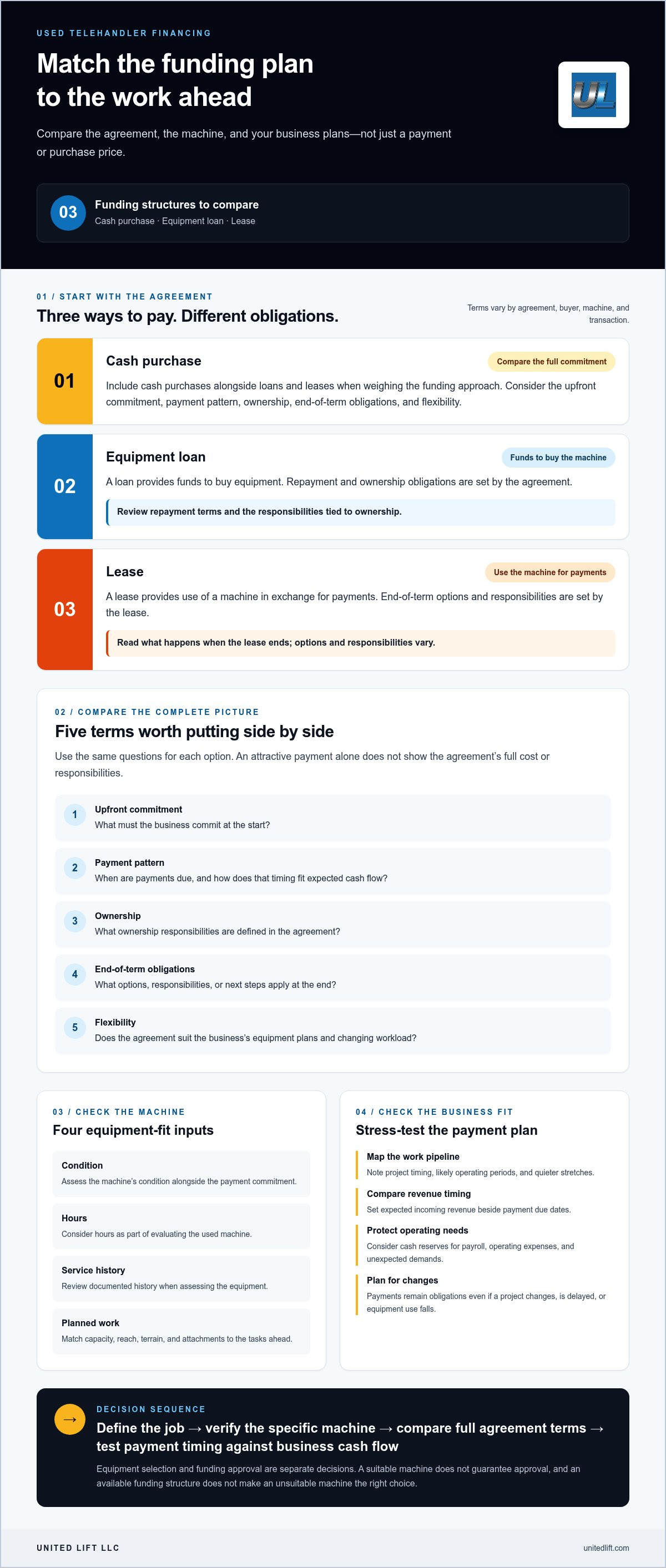
- Compare cash purchases, equipment loans, and leases by upfront commitment, payment pattern, ownership, end-of-term obligations, and flexibility.
- When financing a used telehandler, consider its condition, hours, service history, and expected role alongside the payment obligations.
- Organize commonly requested business and equipment details to make a financing inquiry more focused.
- United Lift LLC sells used telehandlers and facilitates equipment loans and leasing options for business customers.
Financing a Used Telehandler: What the Decision Really Involves
Financing a used telehandler involves more than arranging money for a purchase. It means choosing an agreement that helps your business acquire equipment while managing cash flow, payment obligations, and the responsibilities that come with using or owning the machine. The right fit depends on the work ahead and the agreement’s full terms, not just the purchase price.
An equipment loan provides funds to buy a machine, with repayment and ownership obligations set by the agreement. A lease provides use of a machine in exchange for payments, with end-of-term options and responsibilities set by the lease. That distinction is a starting point, not a guarantee that every agreement works the same way. Terms vary, and eligibility depends on the buyer, machine, and transaction.
What does financing a used telehandler mean?
The financing agreement brings together three factors: your business profile, the telehandler being considered, and the transaction terms. A lender may assess information about the business and machine before deciding whether to finance a particular purchase. The equipment’s age, condition, documented history, and planned use may be relevant, but requirements differ.
Keep equipment selection separate from funding approval. First, identify a machine that suits the job. Then consider whether the proposed agreement works for your business and the specific asset. A suitable telehandler does not automatically mean an application will be approved, just as an available funding structure does not make an unsuitable machine the right choice.
When does financing make sense for a business?
Start with the machine’s expected contribution. List the projects it will support, how regularly it may be used, and how long you expect to need it. Compare that plan with available cash and upcoming business commitments. Financing may help preserve funds for other operating needs, but it also creates scheduled obligations even if a project changes or the machine is used less than expected.
Consider the timing of the work, too. A business with seasonal demand may prefer a payment schedule that better aligns with cash flow, if the agreement allows it. Terms vary, so do not assume payments can be adjusted to match a busy season. Map when revenue is expected, when payments fall due, and how the business would manage a delay.
- Project fit: Does the telehandler support work you expect to take on?
- Utilization: Will expected use justify the ongoing payments and ownership responsibilities?
- Cash reserves: What funds need to remain available for payroll, operating expenses, or unexpected business demands?
- Term alignment: Does the agreement’s duration and end-of-term structure suit your equipment plans?
Compare the complete obligations, not just one payment or the purchase price. Review upfront commitments, payment timing, ownership responsibilities, and what happens when the agreement ends. This gives you a clearer basis for deciding whether cash, a loan, or a lease fits the telehandler’s planned role in your business.
Match the Used Telehandler and Financing Plan to the Work
Establish equipment fit before comparing financing offers. Start with the tasks the telehandler must handle, then use its expected work schedule to assess what payment obligations your business can carry. A machine that looks suitable on paper may not fit the worksite, while extra capability for rare tasks may not be worth prioritizing.
Which telehandler requirements should shape the decision?
Write down the demands of recurring jobs first. Include the loads to be moved, required lift height and reach, ground conditions, and attachments needed. Then separate occasional tasks from routine ones. This helps you avoid basing the purchase on an unusual job or paying for capabilities your regular work does not require.
- Load needs: Consider what you’ll lift and where the load must be placed.
- Height and reach: Note the working positions required on your sites.
- Terrain and access: Record ground conditions, clearances, and space to maneuver.
- Attachments: Identify the tools needed for regular tasks.
Verify specifications for the specific machine, not just a general model description. Rated capacity can depend on configuration and working position, and attachment compatibility is model-specific. Compare the equipment information with your actual job requirements before deciding a machine fits.
How should expected use inform financing?
Build an estimate from your own work pipeline. Mark when projects are expected to begin and end, how often the telehandler may be needed, and whether demand continues between jobs. These are planning inputs, not guarantees of utilization or revenue. They help you compare the expected equipment-use period with the agreement’s payment schedule and obligations.
Test the schedule against slower periods, not just peak activity. If work is seasonal or project-based, consider whether the business can manage payments while the machine is idle or a job is delayed. Do not assume the payment pattern can be tailored to busy months; available terms vary. For broader context on lender considerations and financing approaches, SoFi’s Guide to Heavy Equipment Financing offers an overview.
- Map expected project dates and likely operating periods.
- Compare payment due dates with the timing of incoming business revenue.
- Allow for quieter stretches and changes to the work pipeline.
Once you’ve defined the job, use those requirements to narrow your equipment search. Browse used telehandlers from United Lift LLC with your lift, reach, terrain, and attachment needs in mind as you consider financing options.
Compare Used Telehandler Loans, Leases, and Cash Purchases
There isn’t one best way to pay for a used telehandler. A cash purchase, equipment loan, and lease can differ in upfront commitment, payment pattern, ownership, flexibility, and end-of-term responsibilities. Compare the actual agreement, not just the first payment or quoted monthly amount. Rates, down payments, approval criteria, and lease structures depend on the offer and transaction.
Use this table as a starting point. The contract sets the details, so review its terms before deciding.
| Option | Upfront commitment | Payments and ownership | End-of-term obligations and flexibility |
|---|---|---|---|
| Cash purchase | Pay for the equipment upfront. | No equipment financing payments; the buyer owns the machine under the purchase arrangement. | No financing contract to complete, but the buyer retains ownership responsibilities. Cash used for the purchase is no longer available for other needs. |
| Equipment loan | May require an upfront contribution, depending on the offer. | Repay borrowed funds according to the loan schedule. Ownership and any lender interest in the equipment depend on the agreement. | Check final payment obligations, fees, and any conditions for keeping or transferring ownership. Flexibility depends on the contract. |
| Lease | May involve an initial payment or other upfront obligations, as set out in the lease. | Make payments for the use of the equipment under the lease terms. A lease doesn’t necessarily transfer ownership during the term. | Options may include returning the machine, extending the arrangement, or another contract-defined outcome. Review any conditions and charges that apply. |
How does an equipment loan compare with a lease?
With a loan, the business borrows to acquire equipment and repays under the agreed schedule. A lease sets payment and use obligations, while ownership and end-of-term options depend on its wording. Neither structure is automatically more predictable or flexible. Compare due dates, payment changes, fees, early-exit terms, and final obligations in each written offer. Lender requirements and used-equipment eligibility can vary.
For a fair comparison, line up the offers using the same machine and transaction details. Review the full amount payable over the agreement, any required upfront contribution, applicable fees, payment frequency, and end-of-term conditions. A lower periodic payment may come with a longer obligation or different responsibilities later. Don’t judge financing a used telehandler by payment size alone.
When might paying cash be worth comparing?
Paying cash avoids financing obligations, but it can tie up funds the business may need elsewhere. Before choosing, account for cash required for regular operations and the equipment’s separate ownership costs. Include transport, insurance, maintenance, and other expected obligations in your budget rather than treating the purchase payment as the full outlay.
Compare each option against available cash, equipment needs, and your planned ownership period. A side-by-side worksheet can show what funds remain after a cash purchase and what obligations continue under a loan or lease. Weigh those commitments against the value of keeping cash available for other business priorities.
Prepare for a Used Telehandler Financing Application
A well-organized inquiry helps move from machine evaluation to financing review. Gather information about your business and the specific telehandler, keeping the two assessments distinct: the equipment must fit the work, and the financing review considers the buyer and transaction. Approval and terms depend on the financing review and transaction details. Preparing relevant information can make the inquiry more focused, but document requirements and timelines vary.
What information should buyers organize?
Start with the basics, then add financial and equipment details as they’re available. These are useful preparation categories, not a universal checklist. Requirements vary by financing arrangement and transaction.
- Business identity: Organize the business’s legal name, contact details, ownership information, and time in operation.
- Financial information: Have relevant business financial records ready, such as recent statements or bank records, if requested. Additional information may be needed during the review.
- Intended use: Summarize the work the machine will support, expected operating periods, and the types of jobs in your pipeline.
- Equipment details: Record the telehandler’s make, model, hours, condition information, and any included attachments. Keep available specifications and service records together.
Clear, consistent details help explain what you’re seeking and why. Avoid presenting estimates as confirmed facts. For example, distinguish planned project dates from signed work, and describe reported machine hours as stated in the equipment information rather than as an independent inspection finding.
How can buyers reduce used-equipment uncertainty?
Review the records and condition information available for the specific machine before moving toward a final transaction. Look for service history, operating hours, included attachments, and details about its current condition. Compare the equipment specifications with the loads, reach, terrain, and work conditions you identified. A general model description may not answer questions about a particular unit or configuration.
Make a short list of the information you still need to assess the machine, then keep the answers with your application notes. This gives you a clearer equipment picture to bring into the financing inquiry. It does not replace underwriting, and a favorable equipment assessment does not guarantee financing approval.
- Match available specifications to the machine’s intended tasks.
- Review service and condition details for the specific unit.
- Note attachments included in the transaction and check their compatibility.
- Keep equipment questions separate from questions about financing terms or approval.
Once you’ve organized the business and machine details, begin a used telehandler financing inquiry. United Lift sells used telehandlers and facilitates equipment loans and leasing options for business customers. Bring your intended application details and equipment information to keep the discussion focused.
Explore Used Telehandler Financing with United Lift
You’ve identified the work, considered what the machine must do, and compared the main ways to pay. Now bring those decisions together. United Lift LLC sells new and used telehandlers and facilitates business equipment loans and leasing options. You can discuss equipment needs and financing in the context of the same purchase, then evaluate the terms for your business.
What to bring to an equipment and financing conversation
A short, organized brief helps keep the discussion focused. Bring the requirements that will affect which telehandler fits, along with the business priorities that will shape your financing questions. You don’t need to have every detail settled. Start with what you know and flag what still needs discussion.
- Work requirements: Note the loads, lift capacity, reach, terrain, and site conditions the machine must handle.
- Attachments: List the attachments you expect to use and any compatibility questions about the specific machine.
- Expected use: Outline the kinds of jobs, project timing, and operating periods you anticipate.
- Business priorities: Identify cash-flow needs and the payment pattern you’d prefer to explore, without assuming a particular schedule will be available.
- Questions: Bring questions about the machine’s specifications, condition information, included equipment, and the payment and end-of-term obligations in a loan or lease.
This preparation gives the conversation a practical starting point. If you’re also comparing material-handling equipment for other jobs, United Lift LLC’s forklift buying guide can offer broader equipment-selection context alongside your telehandler research.
How to take the next step with United Lift LLC
Start by narrowing your equipment needs to the tasks the machine must perform. Then review used telehandlers with those requirements in mind and gather questions about a specific machine. Share your business priorities and discuss the financing path you’re considering. United Lift LLC facilitates equipment loans and leasing options for business customers; terms and approval depend on the transaction and financing review.
Keep the discussion specific: describe the work, explain how you expect to use the machine, and identify the payment considerations that matter to your business. If you’re still weighing financing a used telehandler, organize your remaining questions rather than choosing based on a headline payment alone.
Browse United Lift LLC’s new and used telehandlers, then contact the team by phone or email to discuss equipment needs and financing options.
Make Your Next Equipment Move with Confidence
The best next step is a focused conversation grounded in your actual work. Bring your business priorities and questions about the machine, then compare financing details with the cash flow you need to protect. Financing a used telehandler should support a practical equipment decision, not force your business into a payment structure that doesn’t fit.
United Lift sells new and used telehandlers for business applications and facilitates equipment loans and leasing options for business customers. Phone and email support is available seven days a week, so you can move from planning to a clear inquiry on a schedule that works for you.
Explore used telehandlers and financing options, and take the next step toward equipment that fits your operation.
Frequently Asked Questions
Can you finance a used telehandler?
Yes, financing a used telehandler may be possible through an equipment loan or lease, depending on the buyer, machine, and transaction. Used status alone doesn’t determine eligibility. A financing review may consider whether the equipment and purchase details meet applicable requirements, along with the business’s financial profile. Identify the specific machine and purchase details so the proposed terms can be evaluated as a complete commitment.
Is it harder to finance a used telehandler than a new one?
Not always, but a used machine may prompt additional review of its age, condition, hours, and available records. A newer machine may have clearer documentation or fit financing criteria more easily, but that doesn’t guarantee approval or better terms. For a used telehandler, accurate equipment details help describe what’s being financed. Compare the actual offers for each machine rather than assuming new or used equipment is automatically easier to finance.
What credit or business information may a lender request for telehandler financing?
A financing review may consider business ownership, time in operation, credit history, revenue, cash flow, existing obligations, and planned equipment use. Financial records may also be requested to support the application. Requirements differ, so treat any checklist as a starting point, not a universal rule. Be ready to explain how the purchase fits the business’s work and how scheduled payments would be managed if revenue changes.
How do I compare a telehandler loan with a lease?
Compare more than the regular payment. Review total contractual obligations, upfront amounts, payment schedule, fees, ownership terms, and what happens when the agreement ends. A loan and a lease can assign different responsibilities and end-of-term choices, so read the relevant clauses rather than relying on a general description. If you expect to keep the machine for a long time, pay particular attention to ownership and any conditions for completing the agreement.
Can a business finance a used telehandler with a different make than the financing provider sells?
Possibly. Some financing arrangements can cover equipment made by a manufacturer other than a provider’s primary brands, but this depends on the financing arrangement and transaction. The machine’s documentation, age, value, and seller may be considered as part of the review. Include the make and model in your inquiry and describe the intended purchase clearly. The written offer will show which equipment the arrangement covers.
Does the age or condition of a used telehandler affect financing approval?
It can. A financing review may consider the machine’s age, operating hours, condition, service history, and specifications. Older or less-documented equipment may receive closer review, though criteria vary. Separately, assess whether the machine is suitable for your work. Financing approval and equipment condition are different questions, and a positive decision on one does not establish the other.
Can financing a used telehandler qualify for a tax deduction?
Possibly. For the 2026 tax year, qualifying used equipment may be eligible for tax treatment such as a Section 179 deduction, subject to current IRS rules and the business’s circumstances. Eligibility can depend on factors such as how the equipment is acquired and used, and tax rules may change. A deduction isn’t automatic. Review the purchase and financing structure with a qualified tax professional before relying on a tax benefit.
- Tags: buyer guide, construction equipment, equipment financing, equipment purchasing, financing a used telehandler, heavy equipment loans, telehandler leasing, used telehandler
