
Pre-Purchase Forklift Inspection: Daily Check Documentation
Posted by United Lift LLC on
What if a forklift passes today’s check, but its history still points to a problem? During a pre-purchase forklift inspection, daily inspection records can reveal patterns that a quick look might miss. A stack of checkboxes, however, isn’t enough if it doesn’t show what the operator observed or what happened next.
It’s reasonable to wonder what belongs in a useful record, especially because routine shift checks and a buyer’s evaluation serve different purposes. Daily checks capture the forklift’s condition at a particular point in use. A pre-purchase review considers the machine’s documented history, current condition, and suitability for your work. Missing or vague records don’t prove a forklift is unsafe, but they leave important questions unanswered.
This guide explains how to record findings clearly, including observed defects and follow-up actions, and what history to request before buying. You’ll also learn when to take a forklift out of use and seek a qualified evaluation. Use records as part of your decision, not as a substitute for a thorough physical assessment.
Key Takeaways
- Use your workplace’s approved form or digital system to identify the forklift, record findings, assign follow-up, and close out each daily check.
- During a pre-purchase forklift inspection, compare daily check logs with maintenance documents and a current assessment to build a fuller picture of the machine.
- Treat gaps in the records as a prompt to ask the seller specific questions, not as proof of a particular defect.
- Use consistent terms for findings and correct record errors transparently under your workplace procedures.
- Before deciding, match the forklift’s capacity and condition to your application, and arrange a qualified assessment when needed.
Forklift inspection records: what daily checks document and what they do not
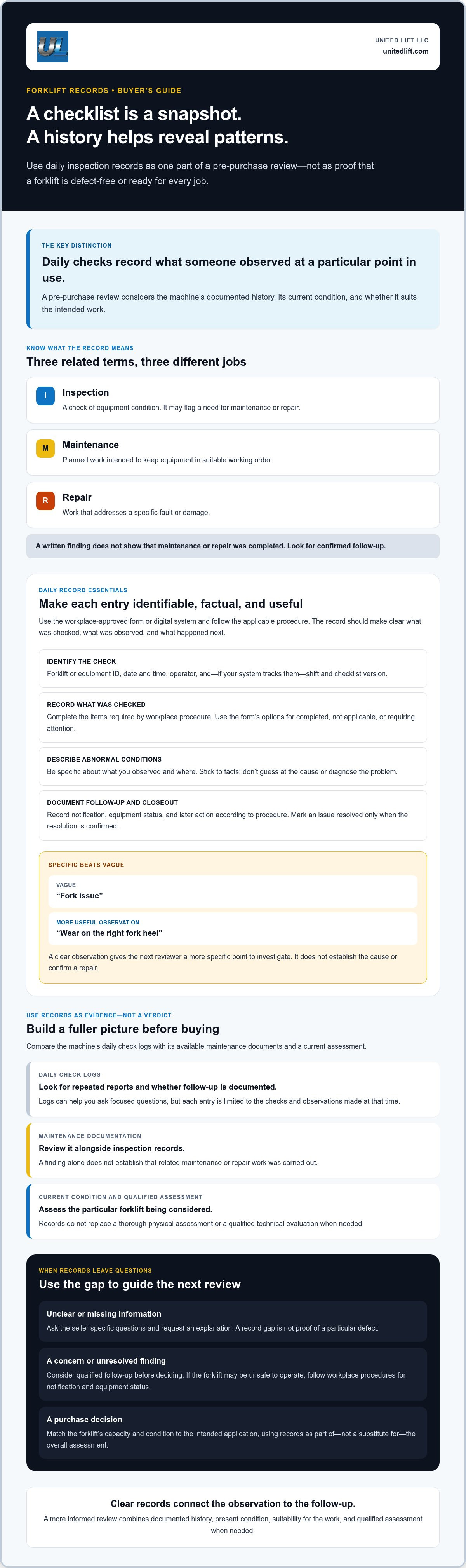
A daily forklift inspection record is a dated account of checks, observations, and follow-up noted under workplace procedures. It helps show what someone observed at a particular point in use. It isn’t a certificate that the forklift is defect-free, and it can’t predict how the machine will perform later.
Keep three terms separate: inspection is a check of equipment condition; maintenance is planned work intended to keep equipment in suitable working order; repair addresses a specific fault or damage. An inspection may flag a need for maintenance or repair, but a written finding doesn’t show that the work was completed.
What should a daily forklift inspection record capture?
The record should make clear which forklift was checked, when the check took place, and who completed it. Follow the employer’s applicable procedure and approved form. Depending on the system, the entry may also identify the shift and checklist version. It should list the items assessed, describe any abnormal condition, and show the follow-up or equipment status required by workplace procedures.
Specific observations are more useful than a general pass or fail mark. A note such as “wear on the right fork heel” gives a reviewer a clearer point to investigate than “fork issue.” Record what was observed. Don’t guess at the cause or imply that a concern was resolved without confirmation.
How is a pre-purchase forklift inspection different?
A daily check is a routine snapshot connected to equipment use. A pre-purchase forklift inspection is a buyer’s broader assessment of a particular machine’s condition, suitability for the intended work, and available history. Daily records can help a buyer spot recurring reports or ask about follow-up, but they don’t replace a qualified technical assessment of the forklift being considered.
One completed checklist also has limits. It records the checks and observations made at that time. It doesn’t establish long-term reliability or guarantee that every possible issue was identified. Review daily logs alongside available maintenance documentation and the machine’s present condition. If a record is unclear or raises a concern, ask for an explanation and consider qualified follow-up before deciding.
How to document forklift daily inspections step by step
A consistent process makes entries easier to review and hand off between shifts. Use your employer’s approved paper form or digital system, and follow the workplace procedure for completing and submitting it. There isn’t one universal template for every operation. Record information promptly, keep it readable and factual, and make sure each entry can be attributed to the responsible operator.
What information belongs on the inspection form?
Start by identifying the forklift and the inspection. Include the equipment ID, date and time, shift, operator, and applicable checklist version if your system tracks one. Complete the checks required by your workplace procedure. Use the form’s available options to mark an item as completed, not applicable, or requiring attention.
A checkmark may not explain what needs follow-up. Add a concise description for an abnormal finding. For example, identify where visible damage was observed rather than writing only “damage.” Stick to what you saw or heard. Don’t guess at the cause.
How should an operator record a defect?
Describe the observed condition, its location, and any operating symptom. Note who was notified, when it was reported, and the forklift’s immediate status if the workplace process calls for it. Follow the employer’s procedures if the forklift may be unsafe to operate. An operator’s report documents an observation; it doesn’t diagnose the problem.
Assign follow-up through the appropriate workplace process. Add an authorized review or resolution to the record only when it’s confirmed. Don’t mark an issue resolved based on an assumption or an informal handoff. This connects the finding, notification, and later action in the record.
Use this sequence to complete and close an entry:
- Identify: Record the forklift, operator, inspection time, and form version where applicable.
- Check: Complete the items required by the workplace checklist.
- Describe: Note abnormal conditions in specific, factual language.
- Follow up: Record notification and equipment status according to procedure.
- Close: Document authorized review or resolution when confirmed, then submit the entry as directed.
Regulatory inspection and recordkeeping duties can depend on the workplace and applicable requirements. Verify current rules with the relevant regulator or a qualified compliance resource. Treat the steps above as practical documentation guidance, not as a statement that every detail is a universal legal requirement. For additional used-equipment considerations, see this guide to buying a used forklift.
Clear daily entries can give buyers useful context during a pre-purchase forklift inspection, but they’re only one part of evaluating a machine. To discuss available forklift options and equipment details, contact United Lift LLC.
How to use forklift inspection records during a pre-purchase forklift inspection
Use records as one part of a larger evidence set, not as a verdict on the forklift. Daily inspection logs show what operators reported at particular times. Maintenance documents may show what work was recorded. A current pre-purchase forklift inspection assesses the machine’s condition at the time of the evaluation. Each source answers different questions, and none guarantees future performance.
Before reviewing documents, confirm they relate to the exact forklift under consideration. Compare the make, model, serial number, or other identifying information on the machine with the details on each record. Note the source and date of every document you review. This helps prevent records for a similar-looking machine from being mistaken for its history.
What questions should buyers ask about inspection history?
Ask what records are available and which machine identifiers appear on them. Find out who completed the daily checks and whether reported findings have documented follow-up. If a concern appears repeatedly, ask what action was taken and whether the available records show a confirmed resolution.
Gaps deserve clarification, not an automatic conclusion. Ask whether records weren’t kept, weren’t retained, or simply aren’t available for review. Don’t assume the reason or infer a specific defect. Keep a short list of unanswered questions and compare the answers with the documents and the forklift’s present condition.
What can records tell you, and what remains uncertain?
Inspection logs can show reported observations and recurring concerns. Maintenance records can provide context about work that was documented. Their usefulness depends on details such as dates, machine identification, descriptions, and recorded follow-up. A vague entry or missing period makes the history harder to interpret, but it doesn’t establish what happened during that time.
Documents can’t confirm the forklift’s current condition on their own. A completed daily checklist reflects checks at a specific time, not every possible issue or how the machine will perform later. If records raise questions, conflict with each other, or don’t answer key concerns, arrange an assessment by a qualified technical professional before deciding.
Use the findings alongside your application needs, including the work the forklift must perform and the capacity required. For broader purchase considerations, consult the forklift buying guide as well as the machine-specific history. Keep your notes together so you can follow up on unanswered questions before making a decision.
How to make forklift inspection records clear, consistent, and useful
Records become more useful when different operators describe similar observations in comparable terms. Agree on the wording used in your approved form, and use the same forklift identifier across entries. Consistency helps supervisors scan records for recurring concerns without having to interpret a new description each shift.
How can teams avoid vague or incomplete inspection notes?
Replace broad labels such as “bad” with observable details. Note the component or location and any symptom the operator noticed, without speculating about the cause. For example, “visible damage on the left fork tip” gives the next reviewer more to work with than “fork problem.” Keep the wording factual and use the terminology provided by workplace procedures.
Make sure the record has room for handoff details, such as who was notified, the follow-up status, and authorized sign-off where appropriate. If an entry needs correction, follow workplace recordkeeping procedures so the change is transparent. Store completed records in the designated secure location, accessible to authorized staff who need them. Follow the organization’s retention process rather than assuming a universal time period.
When should a forklift be taken out of service?
If a condition may affect safe operation, follow employer procedures for stopping use and reporting the concern. Don’t treat a completed form or an informal handoff as clearance to keep operating the forklift. Check current OSHA requirements that apply to your workplace, since regulatory duties depend on the circumstances.
Assessment and clearance should come from authorized, qualified personnel. The operator’s role is to report what they observed and follow the workplace process, not to determine that a technical issue is resolved. Keep the status clear for the next shift so the equipment isn’t mistakenly returned to use before the required review.
Clear records can help buyers ask focused questions about a machine’s documented history. If you’re exploring forklifts for your operation, contact United Lift LLC about available forklift options and ask about the details for a specific machine.
Use inspection documentation to make a more informed forklift purchase
Make the records part of a broader decision, not the whole decision. Identify the exact machine, review the documents available for it, list unanswered questions, and arrange a qualified assessment if needed. Then weigh what you learn against the forklift’s capacity and the demands of your application.
What to bring into a conversation with an equipment dealer
Have the forklift’s identifying details ready, along with a clear description of the work it needs to do. Bring or reference the inspection logs and maintenance documents you’ve reviewed. Ask whether each record belongs to the specific unit under consideration, who completed the checks, and whether reported concerns received documented follow-up.
Be direct about anything that remains unclear. For example, ask what a recurring entry refers to or whether an unresolved observation has been reviewed. If the available records don’t answer the question, discuss whether an additional qualified evaluation is appropriate before making a decision.
Choose equipment with records and application in view
Documented history can inform your view of a forklift’s condition, but it shouldn’t outweigh whether the machine fits your actual work. Consider capacity, application, current condition, and what the records do and don’t establish. A well-organized file isn’t proof that a forklift is defect-free, just as a gap in records doesn’t by itself prove a defect. For broader selection considerations, refer to the forklift buying guide alongside your review of the specific machine.
Documentation informs due diligence; it doesn’t replace a hands-on assessment. A pre-purchase forklift inspection should bring the available history together with a qualified evaluation of the machine’s present condition. Keep your questions and findings in one place so you can compare the evidence before deciding.
Ready to explore your options? Browse United Lift LLC’s available forklifts and ask about a specific machine, including the information available to support your purchase decision.
Turn inspection records into a confident next step
Clear daily records make findings easier to track, but they’re only one part of a buying decision. Check that documents match the specific forklift, note unanswered questions, and compare the documented history with the machine’s current condition and your work requirements. A pre-purchase forklift inspection should include a qualified assessment when the records or condition leave concerns unresolved.
Keep routine checks factual and consistent. Record reported issues, follow-up, and equipment status according to your workplace procedures. If a condition may affect safe operation, follow those procedures rather than relying on paperwork as clearance to continue using the forklift.
United Lift offers new and pre-owned forklifts from major equipment brands, facilitates equipment financing options, and accepts phone and email inquiries seven days a week. Browse available forklifts and ask about a specific machine to discuss its details as you weigh your options.
A careful review gives you a clearer basis for your decision. Take the next step with the records, questions, and application needs in view.
Frequently Asked Questions
How do you document a forklift daily inspection?
Use the employer’s approved checklist or digital process, not an assumed universal form. Identify the forklift, inspection date and time, and operator. Record each required check using the options provided, then describe any abnormal finding clearly, including its location or observed symptom. Add who was notified and the equipment’s status where the workplace process calls for it. Make entries promptly, keep them factual, and follow workplace procedures for reporting and follow-up.
What should be included in a forklift inspection checklist?
A forklift inspection checklist should reflect the employer’s procedure, the truck being checked, and applicable requirements. Depending on the equipment and workplace, checks may cover visible damage, tires, forks, controls, warning devices, and leaks. Confirm which items belong on the appropriate checklist rather than treating this list as universal. Record abnormal observations specifically. A checklist helps structure checks, but it doesn’t replace qualified evaluation when a suspected defect needs assessment.
Is a written record required for every forklift daily inspection?
There isn’t enough context to give a universal answer about written records or retention periods. Check the current OSHA language that applies to your workplace and distinguish any inspection or examination obligation from a requirement to use a specific form or keep records for a set time. Follow your employer’s established process, and verify regulatory details with a qualified compliance resource. A consistent written or approved digital record can support communication and follow-up.
What should you do if a daily forklift inspection finds a defect?
Follow your workplace’s defect-reporting and out-of-service procedures, and notify the designated supervisor. Document what you observed, where it appeared, when you reported it, and what immediate action was taken. Don’t continue operating the forklift if the condition may make use unsafe. Only authorized, qualified personnel should assess the issue and determine whether it has been addressed before the machine returns to use. Verify applicable regulatory requirements for your workplace.
How is a pre-purchase forklift inspection different from a daily inspection?
A daily inspection is a recurring operational check completed under workplace procedures. A pre-purchase forklift inspection is a buyer’s broader review of a particular machine’s condition, suitability for the intended work, and available history. Daily logs can help identify questions about reported concerns or follow-up, but they don’t establish the forklift’s current condition. Arrange a qualified technical assessment when needed before making a purchase decision.
Can forklift inspection records prove that a used forklift is safe?
No. Records alone can’t guarantee that a used forklift is safe or predict its future condition. They show what was documented at particular times and may help reveal recurring findings or gaps in follow-up. Check that each document matches the specific machine, ask for clarification about unclear entries, and compare the records with the forklift’s present condition. Seek a qualified assessment if questions remain or the documentation is incomplete.
How long should forklift inspection records be kept?
There’s no single retention period to assume for every workplace and record type. The appropriate period may depend on applicable requirements, employer policy, and the kind of document. Confirm current rules with a qualified compliance resource, then follow your organization’s record-retention process. Store records securely and make them retrievable by authorized staff who need them for operational follow-up or purchase due diligence. Don’t discard records based on an unsupported general rule.
- Tags: daily check logs, equipment buying guide, forklift inspection, forklift maintenance, pre-purchase forklift inspection, pre-purchase inspection, used forklifts, warehouse safety
