
Forklift Loan for Small Business: A Practical Financing Guide
Posted by United Lift LLC on
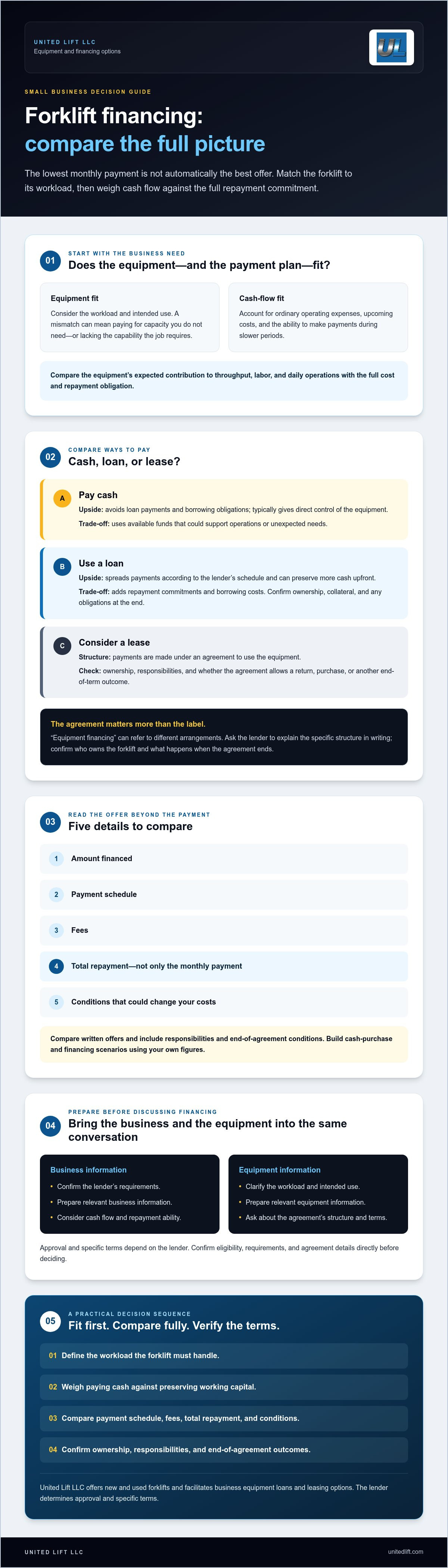
What if the best forklift financing offer isn’t the one with the lowest monthly payment? For a small business, a forklift loan needs to fit the equipment’s workload and the cash flow available for repayment. Paying outright could tie up money needed for daily operations, while a payment plan that looks manageable at first can still cost more over time. Choosing a forklift loan small business owners can manage starts with comparing the full picture.
It’s reasonable to have questions about approval, repayment terms, and what lenders need to review. Equipment fit matters, too. A forklift that doesn’t suit your workload may leave you paying for capacity you don’t need or without the capability the job requires.
This guide explains common ways to finance a forklift, how to compare offers by total repayment and cash-flow impact, and what information to prepare before contacting a lender or dealer. It also covers how to match equipment to its intended use. United Lift LLC facilitates business equipment loans and leasing options, so you can explore financing alongside new and pre-owned forklifts. Approval and specific terms depend on the lender.
Key Takeaways
- Assess whether financing fits your equipment needs and working-capital priorities before choosing how to pay.
- Compare a forklift loan and a lease by checking ownership, repayment, and what happens when the agreement ends.
- Evaluate each offer by the amount financed, payment schedule, fees, total repayment, and conditions that could change your costs.
- Before applying for a forklift loan, confirm the lender’s requirements and prepare relevant business and equipment information.
- Bring your workload needs and financing questions together when exploring forklift options. United Lift offers new and used forklifts and facilitates financing options.
When does a forklift loan make sense for a small business?
A forklift loan is financing used to acquire equipment. The lender sets the repayment schedule and agreement terms, which determine what the business owes and when. The decision isn’t simply whether financing is available. It’s whether keeping cash on hand or spreading equipment payments better supports the work ahead.
Financing may help preserve working capital for payroll, inventory, and other daily needs while making necessary equipment accessible. Payments can be planned alongside the period the forklift is expected to serve the business, although the actual schedule depends on the lender’s agreement. A loan is one of several small business financing options, and its value depends on the equipment’s role and the full repayment commitment.
What business situations can financing help address?
An urgent replacement and a planned expansion create different pressures. If a forklift no longer meets operational needs, replacing it may be time-sensitive. An expansion, by contrast, may give the business more time to assess capacity needs and plan for payments. In either case, consider how the equipment is expected to affect throughput, labor, and daily operations. Compare the anticipated benefit with the full cost and repayment obligation. A forklift buying guide can help you assess equipment fit before focusing on financing.
Is a forklift loan better than paying cash?
Neither option is best for every business. Paying cash avoids loan payments and borrowing obligations, but uses funds that could otherwise support operations or cover unexpected needs. Financing preserves more cash upfront, but adds repayment commitments and borrowing costs. The right comparison depends on your cash position, upcoming expenses, and ability to make payments during slower periods.
Build two scenarios using your own figures: one for an outright purchase and one for financing. For the cash option, account for the funds remaining after purchase. For the loan option, record expected payments and total repayment. Check whether either choice leaves enough room for ordinary operating expenses. Avoid relying on generic assumptions about what a business should be able to afford. A forklift loan small business owners consider should fit their actual cash-flow plan, not just the monthly payment.
Equipment selection and financing work best as connected decisions. United Lift facilitates business equipment financing options, including loans and leasing, alongside new and used forklifts. Ask what options may be available, then confirm the lender, agreement structure, eligibility, and terms directly before deciding.
Forklift loan, equipment financing, or lease: what should you compare?
These terms can describe different arrangements. The label alone doesn’t tell you who owns the forklift or what happens at the end of the agreement. An equipment loan is financing used to acquire equipment. “Equipment financing” is a broader description that may refer to different agreements, while a lease sets out terms for using equipment and what happens when the agreement ends. Ask the lender to explain the specific structure in writing.
How does a forklift equipment loan generally work?
The basic steps are to select equipment, apply for financing, review the lender’s offer, and make payments according to the signed agreement. Approval, collateral, ownership, payment frequency, and final obligations depend on that agreement. Don’t assume a particular structure applies just because an offer is called a loan or equipment financing. Confirm the details before committing.
How do cash, loans, and leases compare?
Cash purchase: You pay the purchase amount upfront, avoid loan repayment, and typically have direct control of the equipment. The trade-off is that the purchase uses available funds.
Loan: You spread payments over the schedule in the lender’s agreement. Check who owns the forklift during repayment, whether collateral is required, and what obligations remain at the end.
Lease: You make payments under an agreement to use the equipment. Review who retains ownership, what responsibilities apply, and whether the agreement allows a return, purchase, or other end-of-term outcome.
Compare written offers, not just the advertised payment. Review total scheduled payments, fees, responsibilities, and end-of-agreement conditions. Your equipment plans matter: a business expecting to use a forklift for years may weigh ownership differently from one whose needs may change. A forklift loan small business owners can sustain should fit both the intended use and the full agreement, not just the payment that looks easiest today.
If you’re considering public financing programs, review the U.S. Small Business Administration’s information on SBA 504 loans and confirm directly whether a program fits your situation. To discuss equipment and financing together, you can ask United Lift about equipment financing. United Lift facilitates business financing options, but availability and terms should be confirmed directly.
How can a small business compare forklift loan offers?
A manageable payment is only one part of a financing offer. Compare the full repayment commitment, then test each option against a cautious cash-flow forecast. Use written lender disclosures rather than estimates or verbal summaries, and ask the lender to explain anything that could change over time.
| What to compare | What to record or confirm |
|---|---|
| Amount financed | Amount borrowed and any costs included in the financing |
| Repayment schedule | Payment amount, frequency, duration, and due dates |
| Fees | Every listed fee and when it is charged |
| Total repayment | Total scheduled amount due over the agreement |
| Agreement conditions | Variable terms, collateral, guarantees, prepayment rules, and default provisions |
Which financing details should you review?
Check the annual percentage rate (APR), fees, repayment frequency, total repayment, and any conditions for paying early. Ask whether the rate or payment is fixed or variable. If it can change, ask what drives the change and how it could affect payments. Before signing, get clear answers about collateral, personal or business guarantees, and what the agreement defines as default. The SBA’s overview of small-business loan programs can help you identify questions to ask, but evaluate a specific offer using its written terms.
Don’t judge an offer by its periodic payment alone. A lower payment may come with a longer repayment period or a different total repayment amount. Record the full scheduled cost, then check whether the payment remains manageable if revenue falls short of your forecast. A forklift loan small business owners can sustain should fit a cautious cash-flow plan, not just an optimistic projection.
How do equipment condition and business use affect the decision?
Review the proposed forklift separately from the financing offer. Does its capacity suit the loads, shift pattern, and operating environment? For used equipment, consider its condition and expected service needs as part of the ownership decision, without assuming the lender will apply a particular rule. A suitable forklift doesn’t guarantee financing approval, and approval doesn’t confirm that the equipment is right for the work.
Compare written offers side by side and ask the lender to clarify every unclear condition before signing. This gives you a clearer view of both the payment commitment and the forklift your operation will depend on.
How should a small business prepare for a forklift loan application?
A clear application starts before you contact a lender. Each lender sets its own requirements, so confirm which records are needed before gathering documents. Prepare the basics, describe the forklift your operation needs, and decide what repayment level your cash flow can support. That preparation helps you assess offers without treating approval as the only measure of fit.
- Define the equipment need. Note the work the forklift must handle, the capacity you’re seeking, and whether you’re considering new or used equipment.
- Set a payment comfort range. Review business cash flow and decide what repayment could remain manageable during a slower period.
- Request a written equipment quote. A lender may ask for a quote for the specific forklift, so clarify what details it should include.
- Ask the lender what to prepare. Confirm required documents and how to submit them before collecting records.
- Review the complete offer. Check the written terms and ask questions before signing or accepting an obligation.
What information might a lender request?
Depending on the lender, requested information may include the business’s legal name and EIN, ownership details, time in operation, trade references, and financial records. Some lenders may ask for financial statements or tax returns covering prior years, along with the forklift quote. These are examples, not universal requirements. Provide complete, accurate information, and don’t alter or withhold details to influence a decision.
What should you confirm before submitting an application?
Get the application steps in writing where possible. Ask what documents are required, how long a decision may take, whether submitting an application involves a credit inquiry, and whether application fees apply. Confirm whether collateral or a personal or business guarantee could be part of an offer. Ask who will explain the written agreement and answer questions before you commit.
Keep this checklist handy when speaking with a lender:
- What records do you need, and in what format?
- What is the expected decision timing, and what could affect it?
- What are the repayment terms, fees, and any guarantee or collateral conditions?
- Who will provide the written offer and explain the next steps?
Preparing these details can make a forklift loan small business application easier to evaluate while leaving room to compare actual terms. United Lift facilitates business financing options alongside new and used forklifts. Ask United Lift about equipment financing, then confirm current application details and requirements directly.
Where can a small business find a forklift and explore financing?
Start with the work the forklift needs to do, then bring your financing questions into the same conversation. This helps you compare equipment options against your workload and budget instead of choosing a payment plan before you know what machine fits. A dealer can help you explore forklift options alongside available business financing, but the lender sets its own approval criteria and agreement terms.
What should you have ready before contacting a dealer?
Share the basics of your operation so the equipment discussion is specific. Be ready to describe the loads and capacity you need, the work environment, how often the forklift will be used, and whether you’re considering new or used equipment. Bring a realistic budget and a payment range your cash flow could support. This helps narrow the conversation without implying that you’re preapproved for financing.
You can also ask which current options match your requirements, what information is needed for a written equipment quote, and which financing questions should go to the lender. Keep the decisions connected but distinct: the forklift must suit the job, and the financing must fit your repayment capacity.
What can United Lift help you explore?
United Lift sells new and used forklifts and facilitates business financing options, including equipment loans and leasing. Its inventory includes brands such as Hyster, Yale, Toyota, and Caterpillar. Inventory changes, so confirm current availability and details directly. Ask about the financing process, which lender or agreement may apply, and what terms and application requirements you’ll need to review.
- What current forklifts match the capacity and work environment I described?
- What details should I provide to receive an equipment quote?
- What financing options may be available, and who sets the terms?
- What documents, approval steps, or next actions should I expect?
Bring your workload needs, budget, and questions together before comparing offers. A forklift loan small business owners consider should support the work without placing undue pressure on operating cash. For help exploring forklift options alongside financing questions, contact United Lift about available financing. Confirm current inventory, the application process, and lender-specific terms directly before making a commitment.
Make your next forklift decision with confidence
The right forklift financing choice starts with two checks: does the equipment fit the work, and can your business manage the full repayment commitment? Compare written offers by total repayment, fees, schedule, and agreement conditions. Then test the payments against a cautious cash-flow forecast. Confirm each lender’s application requirements and terms before committing.
A forklift loan small business owners consider should support day-to-day operations, not put unnecessary pressure on working capital. United Lift facilitates business equipment financing options and offers new and used forklifts from brands including Hyster, Yale, Toyota, and Caterpillar. Inventory can change, so confirm current availability, financing processes, and lender-specific terms directly. Phone and email support is available seven days a week.
Have your equipment needs and budget ready, then contact United Lift to discuss forklift options and available financing. A clear comparison can help you move forward with a practical plan and equipment that fits your operation.
Frequently Asked Questions
Can a small business get a loan to buy a forklift?
Yes, a small business may be able to finance a forklift through an equipment loan or another financing arrangement. Approval and terms depend on the lender and the business’s application. Compare the written repayment schedule, total repayment, fees, and agreement conditions before committing. United Lift facilitates business equipment financing options, but availability, eligibility, and specific terms should be confirmed directly.
What credit score do you need for a forklift loan?
There isn’t one credit score that guarantees approval for every forklift loan. Lenders set their own criteria and may review other details, such as business finances, operating history, and existing obligations. Ask which credit information the lender considers and whether applying involves a credit inquiry. A lower score doesn’t automatically tell you what an offer will look like, so check the lender’s requirements and compare the terms you’re offered.
How much does a forklift loan cost?
The total cost depends on the amount financed, interest rate, repayment period, fees, and other conditions in the agreement. Review the annual percentage rate, payment schedule, and total scheduled repayment in writing. A lower periodic payment may involve a longer commitment, so don’t compare offers by monthly payment alone. Ask the lender to explain any charges or variable terms before deciding, and use the actual written offer to plan your budget.
Is a forklift loan better than leasing?
It depends on your equipment plans and the specific agreements. A loan may lead to ownership according to its terms, while a lease sets out use and end-of-agreement conditions that can vary. Compare who owns the forklift, scheduled payments, responsibilities, and what happens when the agreement ends. Use written offers to assess total costs. Consider how long you expect to use the equipment and whether your needs may change.
What documents do I need to apply for a forklift loan?
Requirements vary by lender, so ask what records are needed before gathering them. A lender may request business identity and ownership details, operating history, financial statements or tax returns, and a quote for the forklift. These are examples, not universal requirements. Confirm the requested documents, submission method, and next steps directly with the lender. Provide accurate, complete information and ask for clarification if any item on the application is unclear.
Can I finance a used forklift for my small business?
Possibly. Whether a used forklift can be financed depends on the lender’s criteria and the specific equipment and agreement. Ask the lender whether it considers the forklift’s age, condition, or other details instead of assuming a rule applies. Review the equipment’s suitability and expected service needs separately from financing approval. United Lift offers new and used forklifts and facilitates business financing options. Confirm current inventory and terms directly.
Will a forklift loan affect my business cash flow?
Yes. Loan payments become a recurring business obligation, while financing may leave more cash available upfront than paying for the forklift outright. Assess the payment against a cautious cash-flow forecast that includes ordinary expenses and slower periods. Compare the full repayment commitment, not just the first payment. A forklift loan small business owners can manage should fit the operation’s budget without relying on best-case revenue assumptions.
- Tags: business cash flow, commercial financing, equipment leasing, forklift financing, forklift loan small business, forklift purchase, material handling, small business loans, warehouse equipment
